
Trying to put in too much detail will result in too much time being spent in gathering information to make the budget, which may be outdated by the time the budget is finished. However, too little detail will make the budget vague and, therefore, less useful. From the beginning of the project, you should choose a reliable, practical program to manage the budgeting.
- Discover what the Cash Conversion Cycle (CCC) is, how it’s calculated, and why it’s vital for managing working capital in corporate finance.
- Understanding this key performance indicator (KPI) is the first step toward optimizing your working capital.
- Obtain these statements from your company’s annual report, quarterly filings, or financial reporting software.
- This measure strips away sunk costs and focuses on the cash your project will actually add or cost your business.
- In summary, understanding cash flow to creditors is vital for assessing a company’s financial stability, debt management, and commitment to external stakeholders.
- A long CCC indicates poor cash flow management and may lead to liquidity issues or higher financing costs.
How to Interpret the Fixed Charge Coverage Ratio
Additionally, the cost of purchasing the clothes from suppliers, employee salaries, and marketing expenses would be considered operating expenses. Depreciation of store fixtures and changes in accounts receivable and payable would also be https://www.bpp-location.re/2024/08/19/mastering-numbering-systems-crafting-an-unbeatable-3/ relevant factors. The analysis of net borrowing provides a direct window into the company’s capital allocation priorities.
- When evaluating a new capital project, knowing the incremental cash flow can make or break your decision by highlighting the true financial impact beyond surface-level earnings.
- The AR Days formula relies on three specific inputs, ensuring the resulting metric accurately reflects collection efficiency over a defined period.
- The second component, Net New Borrowing, accounts for the net change in principal debt obligations.
- Before starting a project, you need to find the scope of the project, work out realistic deadlines, and ensure that the whole plan is reviewed and approved.
- For example, businesses with high debt levels may have higher cash outflows towards interest payments and principal repayments compared to companies with lower debt levels.
- This outcome typically occurs when the firm’s principal repayments and after-tax interest payments exceed the proceeds from any new debt issuance.
EBITDA formula: the net income method
Here are some of the secrets that will ensure the budgeting of capital expenditures is efficient. There is a wide range of depreciation methods that can be used (straight line, declining balance, etc.) based on the preference of the management team. As a recap of the information outlined above, when an expenditure is capitalized, it is classified as an asset on the balance sheet. In order to move the asset off the balance sheet over time, it must be expensed and moved through the income statement. In the direct approach, an analyst must add up all of the individual items that make up the total expenditures, using a schedule or accounting software. In the indirect approach, the value can be inferred by looking at the value of assets on the balance sheet in conjunction with depreciation expense.
Analyzing Financing Activities
Below, we will walk through each of the steps required to derive the FCF Formula from the very beginning. Both include the Interest Expense + Scheduled Debt Principal Repayments in the denominator, and the numerator for both metrics measures the “cash flow available” to make these payments. The company is leveraged quite aggressively – 5x Debt / EBITDA on an 8x EBITDA acquisition – and its cash flows are weaker in the early years as it transitions to a “capital-light” business model. The FCCR should always be above 1.0x, indicating the company has enough cash flow to pay for its fixed charges, and the healthiest companies should see ratios of 2.0x, 3.0x, or even 4.0x or higher. Incremental cash flow is the additional cash inflow or outflow a company generates by undertaking a new project or investment compared to not doing it.
- It represents the average number of days it takes to collect cash after a sale is made.
- Pair this with a line of credit or cash management account to stay flexible if interest rates rise or your monthly payments fluctuate.
- Keep enough in your primary business checking account for 2 weeks of operating expenses, then transfer the rest into interest-bearing accounts.
- Analysts must understand the accounting assumptions underpinning the sales figure used in the calculation.
- The interest expense is usually found on the Income Statement or detailed in the notes to the financial statements.

Negative cash flow to creditors occurs when a company pays more to its creditors than it receives from them. This suggests that the company relies heavily on borrowing, potentially facing financial strain and increased interest expenses. A high debt-equity ratio Cash Disbursement Journal can be good because it shows that a firm can easily service its debt obligations (through cash flow) and is using the leverage to increase equity returns.
Finance Cardify 2024
It is possible to derive capital expenditures (CapEx) for a company without the cash flow statement. To do this, we can use the following formula with line items from the balance sheet and income statement. When applying the cash flow to creditors formula, one common variation involves adjusting for non-cash items.
Companies also have different guidelines on which investments are considered capital expenditures, potentially affecting the computation of FCF. It shows the cash that a company can produce after deducting the purchase of assets such as property, equipment, and other major investments from its operating cash flow. The basic formula calculates incremental cash flow as the difference between the revenues and expenses generated by the project, minus the initial investment. This approach excludes sunk costs and focuses purely on the project’s incremental financial impact. In summary, understanding the impact of cash flow to creditors on debt management is like having a compass for navigating the complex landscape of business finances.

How to Strategically Reduce Your AR Days
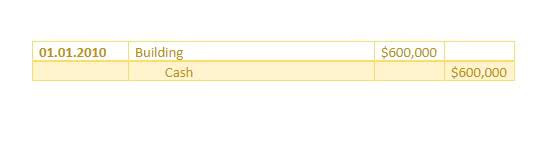
In conclusion, calculating cash flow to creditors is crucial in understanding a company’s financial health. By analyzing the cash flow from operating and financing activities and subtracting dividends paid to shareholders, you can determine the net cash flow to creditors. This insightful calculation provides cash flow to creditors formula valuable insights into how much money a company owes to its creditors and helps evaluate its ability to meet debt obligations. Understanding this concept allows for informed decision-making regarding investments and financial planning.

Factors such as credit policies and inventory management practices play a crucial role in determining the optimal CCC for each industry. Days Inventory Outstanding (DIO) measures how long it takes, on average, to sell inventory. Days Sales Outstanding (DSO) measures how long it takes to collect payments from customers after a sale. Finally, Days Payable Outstanding (DPO) measures how long a company takes to pay its suppliers. For instance, if a company issues $50,000 in equity, repurchases $20,000 in shares, issues $100,000 in debt, repays $80,000 in debt, and pays $15,000 in dividends, the CFF would be $35,000.
 English